


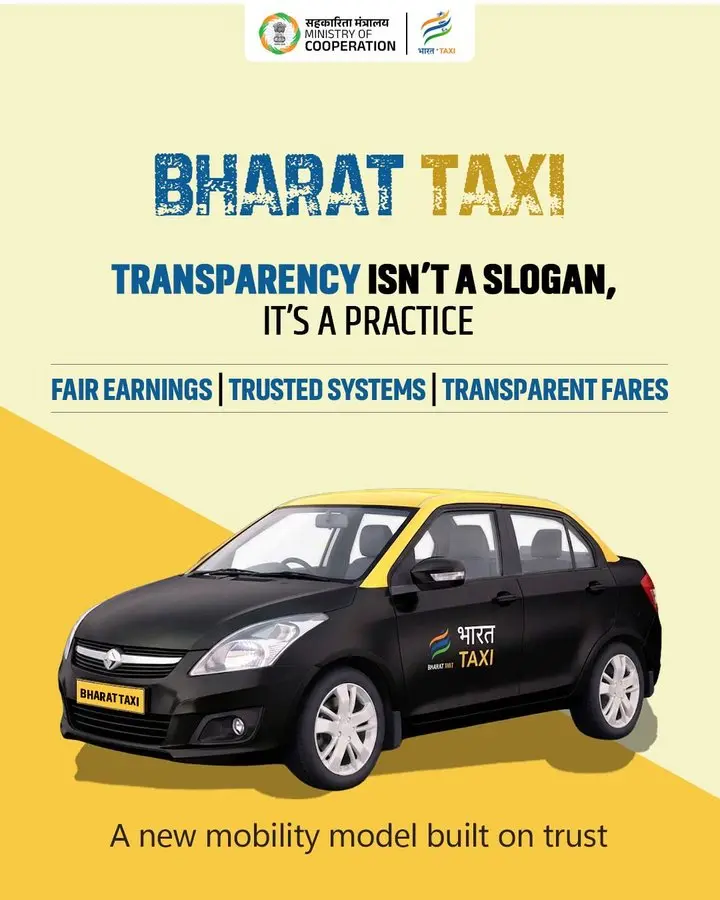
Hot Take Why Bharat Taxi First Cooperative Taxi Service in India Matters
The first of its kind cooperative taxi in India Bharat Taxi Launching marks a step forward towards pleasant urban mobility story. For years, India’s taxi economy has been commanded by private ride-hailing companies that place drivers at the mercy of high commissions, wavering incentives and little control. We want a company like Bharat Taxi, our discussion wasn’t limited to the office but there was a conversation taking place on public platforms.
It is this latter consideration that the Amit Shah sponsored formulated scheme will address not as a mode of transport but as a social and economic correction. It is an enabler that fuses cooperative principles with modern technology to provide drivers dignity, certainty and meaningful ownership in the platform from which they earn a living. And for passengers, it offers a degree of transparency and reliability. It provides policymakers with a new model for the gig economy.
What is Bharat Taxi First Cooperative Taxi Service in India?
Bharat Taxis, the first taxi service in India to be on a cooperative model of ownership. However, unlike a regular taxi app that is owned by private companies/foreign investors, Bharat Taxi will be collectively owned and managed by the driver-member (our customer).
In a cooperative construct, drivers are not enemy independent contractors battling an algorithm. Instead, they get to be shareholders and decision-makers as well. Proceeds from platform revenues are equitably shared after operation fees and policy is determined by democratic process. This brings the spirit of India’s cooperative movement which has long found success in areas like dairy and agriculture to urban transport use.
Why the Announcement by Amit Shah Matters on a National Scale
When a senior leader of the standing of Amit Shah announces a new initiative, it indicates both institutional support and long-term intent. The recommendation of Bharat Taxi indicates that the government is viewing stipulated digital cooperatives as a potential alternative to purely capitalist gig structures.
The announcement follows larger national imperatives growing cooperatives, empowering livelihoods, fostering self-reliance and making sure technological expansion does not ride roughshod over workers’ well-being. By backing the first cooperative taxi service in India (the Bharat Taxi) then, what it will possibly be doing is that it tests and verifies a blue print which could extend to other domains like delivery aggregation, logistics and even platform-based home services.
How the Collective Taxi System Operates
The Bharat Taxi works under the cooperative model of shared ownership and collective governance. Drivers sign up as members of the cooperative, not as independent contractors. They all have a voice, whether by electing representatives or as part of general body meetings, in formulating policies on issues like fare structures, commission rates and service standards.
Members get to share the profits earned by the platform while contributing a part of it, for technology, maintenance and administration. Which guarantees value generated by drivers stays in the community rather than leeching out to investors. Such a model may allow for financial sustainability over time and can develop trust among members.
What Sets Bharat Taxi Apart from Other Ride Aggregator Apps

With Bharat Taxi, the distinction is not only skin deep. The conventional ride-hailing services work on the centralized incentive-driven model, where people get matched for their rides by automated systems and algorithms decide pricing of the rides, incentives and driver visibility. Drivers are left with little alternative if policies change.
The homegrown Indian first co-operative taxi service of Bharat Taxi stands in contrast, aiming at open transparency and participation. Drivers are partners, not interchangeable parts. Decisions are such that a compromise between long-term sustainability and short-run fairness is struck rather than large income shocks. For passengers, that could mean more predictable pricing and better service quality from drivers who feel that they’re invested rather than exploited.
Benefits for Cabbies: Job Security, Respect and Ownership
For the drivers, Bharat Taxi is a game changer. One of the major problems that drivers are having in our day is that they don’t know how much money they are going to make because of dynamic pricing and high fees. Ensuring a reasonable cost fee, and redistributing any surplus back to the members is one way in which the cooperative model works.
Ownership also brings psychological benefits. “We believe drivers do their best work when they feel respected and listened to. With time, being a member of a cooperative can enable access to more benefits like insurance, credit and skills training that reinforce overall financial security.
What Passengers Can Look for Bharat Taxi
For passengers, Bharat Taxi first drivers cooperative in India intends to create a transparent and community-oriented service. Fares will be competitive but without exorbitant surge pricing so costs should not run amok.
Riders may also pick up on a change in the driver’s level of interaction. Group ownership can be a force for shared accountability and pride and that often leads to improvements in timeliness, vehicle maintenance and behavior. Socially-minded users might also appreciate the fact that every ride is a direct investment in someone’s livelihood, rather than padding out shareholder dividends.
Tech & Accessibility: Combining Tradition With Digital Aids
Bharat Taxi, while growing on cooperative lines, is not turning its face from technology. Bookings, payments and navigation will be managed by an app-based interface. The trick is to make technology user-friendly and inclusive so drivers at all digital-learning levels can participate with ease.
If done correctly, the platform could be proof that collaborative systems can go hand in hand with cutting-edge technology a counter-narrative to what much of innovation today represents the idea that innovation must always come from corporations.
Bharat Taxi’s Economic and Social Impact
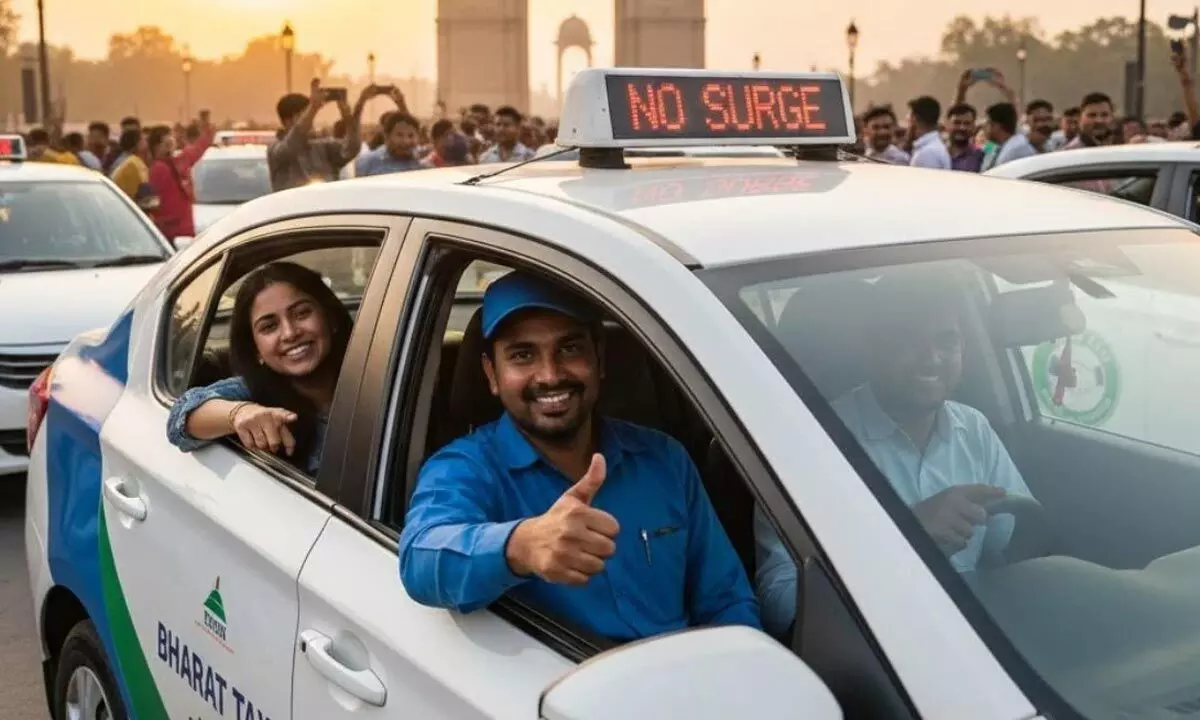
The significance of the first Indian cooperative taxi service Bharat Taxi is not just limited to movement. It’s a step toward inclusive growth, where workers themselves directly benefit from the economic engine. Enabling cooperative platforms to keep revenues local and contribute toward stronger economies can positively influence social security.
Models of this kind can also help promoting ethical consumerism. Cooperative service passengers become in derivatively involved with fair labor standards, thereby creating positive market-based momentum.
Challenges Bharat Taxi May Face
However, Bharat Taxi will have its problems. The governance, dispute resolution system and training all need to be robust in a cooperative platform that scales across access needs in multiple urban markets. It’s unlikely that it will be easy to compete against established platforms with big user bases and marketing budgets.
Service quality and democratization of decision making can also be somewhat conflicting. It would imperative to have clearly delineated rules and transparent communication channels to avert in-fighting and ensure long-run survival.
How This Fits into India’s Cooperative Movement
India has a history of robust cooperatives, from dairy giants to credit societies. Bharat Taxi Recapitulating the past, while replicating the present times! Fortifying a strong Network of travel agents and empowering them with technology enabled services, Bharat Taxi developed into the one-stop shop for all your travel needs.
If it works, this kind of thing could lead to all sorts of other experiments across the gig economy, which would be a reminder that cooperatives matter in this digital age. The model of Bharat Taxi, the first cooperative taxi service in India, could therefore provide a point of reference to inform future policy and innovation.
Here is some practical advice for those drivers looking to join.
Drivers willing to join Bharat Taxi shall wait for official announcements and cooperative channels. It’s important to understand the terms of membership, and how money is split up between members as well as what they’re responsible for before you sign on. Controlled participation in training and attendance of collaborative meetups are some examples which can maximize benefits to divers and could even be seen as co-creating the future platform.
Frequently Asked Questions on Bharat Taxi
A common question, when is Bharat Taxi getting fully functional. That may be different in each region, but phased introductions are anticipated. Another question is that of safety and quality for passengers; cooperative control should include peer accountability systems to ensure this. Riders are also curious if Bharat Taxi will be accessible in every part of India. The longer-term view implies growth, but immediate attention is likely to be on certain cities before replicating.
Conclusion: Why Bharat Taxi Can Change the Face of Urban Mobility in India
The Bharat Taxi the first ever cooperative taxi service in India, is not merely another new app but a movement that raises hard questions about the future of work and ownership in an increasingly digitized economy. By centering drivers, it challenges traditional assumptions about how workers benefit from platform-based growth.
Now, whether Bharat Taxi becomes a hit across the country or merely pushes amid a broader reformation should not be debated and discussed but ”imagined“. It’s a reminder that technology can make communities powerful, not just companies. For the drivers for whom dignity is a scarce resource, passengers who would like to see more fairness, and policy holders who look for inclusive solutions Bharat Taxi presents an inspiring view of what urban mobility in India could be.