


When is Gudi Padwa 2026 date? Millions of people in Maharashtra, Karnataka and across India await the festivities each year to mark Gudi Padwa, Ugadi, the festival that celebrates the New Year for Karnataka and Maharashtrians. As the festival nears in 2026, a crucial question among many is whether Gudi Padwa falls on March 19 or March 20?
The confusion is due to Hindu festivals being based on the lunar calendar, where occasionally the lunar date (tithi) crosses over into two days. But as per Hindu calendar calculations and festival authorities, Gudi Padwa in 2026 will falls on Thursday, March 19.
Observed on Chaitra Shukla Pratipada, the first day of the bright fortnight in Chaitra month, this sacred festival marks the beginning of Hindu lunisolar New Year in Maharashtra and among Konkani people.
Gudi Padwa is a day of celebration, renewal and spiritual significance. Thus it represents wealth, success and the beginning of a new year filled with hope and luck.
Confusion About Gudi Padwa 2026 Date + Why It Happened
People noticed two potential dates March 19 and March 20 which caused some confusion online. This is because the Pratipada tithi, the lunar day by which they have used to determine this festival.
For 2026, the Pratipada tithi starts on morning of March 19 and ends at early hours of March 20. Since the tithi falls on sunrise of March 19, this day is considered to be correct for celebrating gudi padwa.
In Hindu sects, a festival in celebration of tithi that falls two calendar days happens on the day when there is still a tithi at sunrise.
Thus, the first day of the new Chaitra month will be observed as Gudi Padwa throughout Maharashtra and other places on March 19, 2026.
What Is Gudi Padwa?
Gudi Padwa is a major festival for Marathi and Konkani Hindus. Hindus consider it the first day of their lunisolar calendar and celebrate with great enthusiasm in Maharashtra, Goa and parts of Karnataka
- The term “Gudi Padwa” is made up of two words:
- Gudi – a draped flag or emblem of triumph
- Padwa (Padva) the first day of the lunar month
- The combined term refers to the flag that is raised on the first day of the new year as a sign of victory.
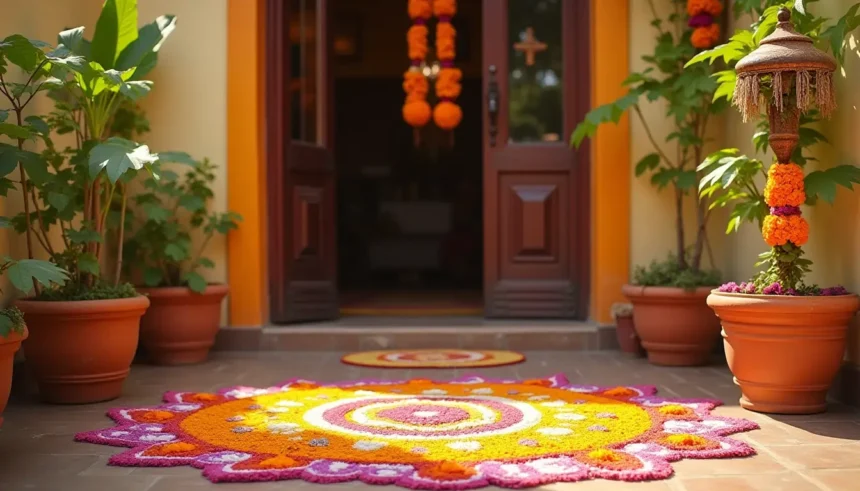
On this day, families clean their homes, decorate the entrance with rangoli and hoist a “Gudi” in front of their houses to evoke prosperity and good luck.
The festival has deep roots in Indian history and Hindu mythology. There are various legends that explain the significance of Gudi Padwa.
The Universe Creation by Lord Brahma
As Lord Brahma created the universe on this day, Gudi Padwa is an auspicious time to start new initiatives or work.
It is this belief that prompts many people to begin new ventures, whether they be in business, investment of some kind, or personal pursuits on this day.
Victory of King Shalivahana
Another myth claims that the festival wasfounded to mark the victory of King Shalivahana who vanquished the Sakas and ushered in an era with a new calendar, termed Shalivahana.
The victory flag that people raised during his return, is said to have transformed into this modern-day Gudi.
Lord Rama’s Return to Ayodhya
Some believe it to mark the return of Lord Rama to Ayodhya after killing Ravana. Gudi signifies triumph over evil and embodies virtue.
Rituals & Customs of Gudi Padwa
Gudi Padwa is marked with colorful rituals that encompass religious, cultural and community traditions.
Early Morning Oil Bath
Ayudha pooja, the day starts with Abhyanga Snan a ritual oil bath which is said to cleanse the body and spirit.
Families wake up early and get the festival clothes on.
Decorating Homes
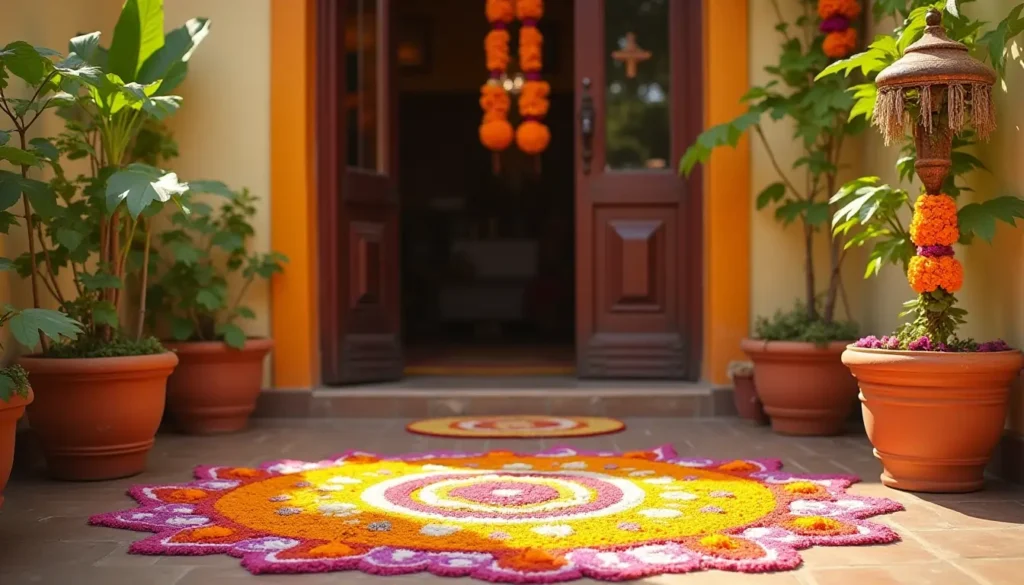
Houses are spick and span, the entrances adorned with colourful rangoli designs.
Mango leaves are placed on doorways to attract prosperity, while comforters and flowers embroidered with polyphalia are hung on walls.
Hoisting the Gudi
The most significant and important ritual of the festival is erecting the Gudi, which is decorated flag that is placed outside homes.
- A Gudi typically includes:
- A bamboo stick
- A bright silk cloth or sari
- Neem leaves and mango leaves
- A strand of sugar crystals known as “gathi”
- At the top of it, an upside down silver or copper pot
Another object that has its importance during Gudi Padwa is the Gudi, which means victory, prosperity and protection against evils.
Prayers and Worship
- Families pray and give deities flowers, sweets, and fruits.
- Devotees also worship Lord Brahma who is credited with creating the universe.
Eating Neem and Jaggery
One of the rituals is to eat a mixture of neem leaves and jaggery.
This combination represents the balance of life both bitter and sweet serving as a reminder for people to embrace both good and bad times in the coming year.
Pakwan (Biscuits): The taste of our traditional biscuits like pakwan on Gudi Padwa cannot be forgone.
Gudi Padwa is celebrated with large quantities of food. At this time, families prepare festive dishes to celebrate the new year.
Traditional Foods Prepared on Gudi Padwa
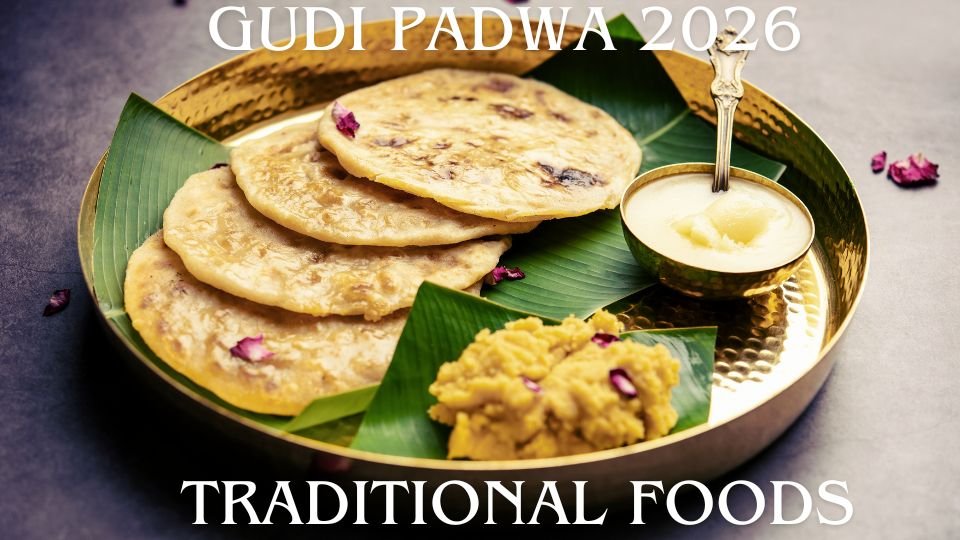
- Puran Poli – sweet flatbread filled with lentils and jaggery
- Shrikhand – sweet yogurt dessert with saffron and cardamon flavoring
- Poori and Aloo Bhaji
- Kheer and other traditional sweets
They are shared with family and guests as part of the feast.
Cultural Celebrations and Community Events
In addition to household rituals, Gudi Padwa is marked with community events and cultural programs.
In many cities across Maharashtra/ Karnataka:
- Processions in colors parade in the streets
- People wear traditional Maharashtrian attire
- People wear traditional Langa Davani and Dhoti attire in Karnataka
- Conduct folk dances and music performances
- Cultural events highlight regional traditions
The festival serves as an exemplar for both Karnataka and Maharashtra’s cultural identity and heritage.
New Year Celebrations In India Similar
It is interesting to note that Gudi Padwa overlaps with many other regional New Year celebrations observed in India.
Some of these include:
- Ugadi in Karnataka, Andhra Pradesh and Telangana
- Cheti Chand among Sindhi communities
- Navreh in Kashmir
- Sajibu Nongma Panba in Manipur
Though the names vary, all of these festivals celebrate the start of the Hindu lunisolar New Year and share similar traditions of renewal and celebration.
Astrological Importance of Gudi Padwa
Astronomically, Gudi Padwa marks the beginning of new Samvatsara (the new year in Hindu calendar).
The New year beginning from 2026 is Parabhava Nama Samvatsara.
On this day many people go to astrologers to know the predictions for the next year, whether it is financial condition, health or career.
The Significance of Gudi Padwa
It is believed that Gudi Padwa brings good fortune, prosperity and success.
Some people have chosen to observe this day by:
- Buy gold or property
- Start a new business
- Launch new projects
- Make important life decisions
The festival symbolizes hope and the idea that a new start brings the potential for good things.
Modern Celebrations in Urban India
Although traditional rituals are still significant, modern celebrations have changed too.
So today, a lot of people celebrate Gudi Padwa:
- Wishing each other happy holidays on social media
- Hosting family gatherings
- Attending cultural events and festivals
- As homes are adorned with unique rangoli patterns
The festival continues to mingle old traditions with new ones.
Conclusion – Gudi Padwa/ Ugadi 2026 date
This is more than just a festival it is an avowal of gudi padwa new beginnings, triumph and cultural heritage. The festivities this year will fall around March 19, 2026, which is considered to be the beginning of the Marathi New Year when families meet and celebrate together.
From its colorful rituals, mouth-watering festive foods to sublime spirituality, Gudi Padwa is today one of the most celebrated festivals in Maharashtra and among Marathi households across the globe!
When individuals lift the Gudi in front of their houses, it symbolizes a new year that brings hope, wealth and positivity.