


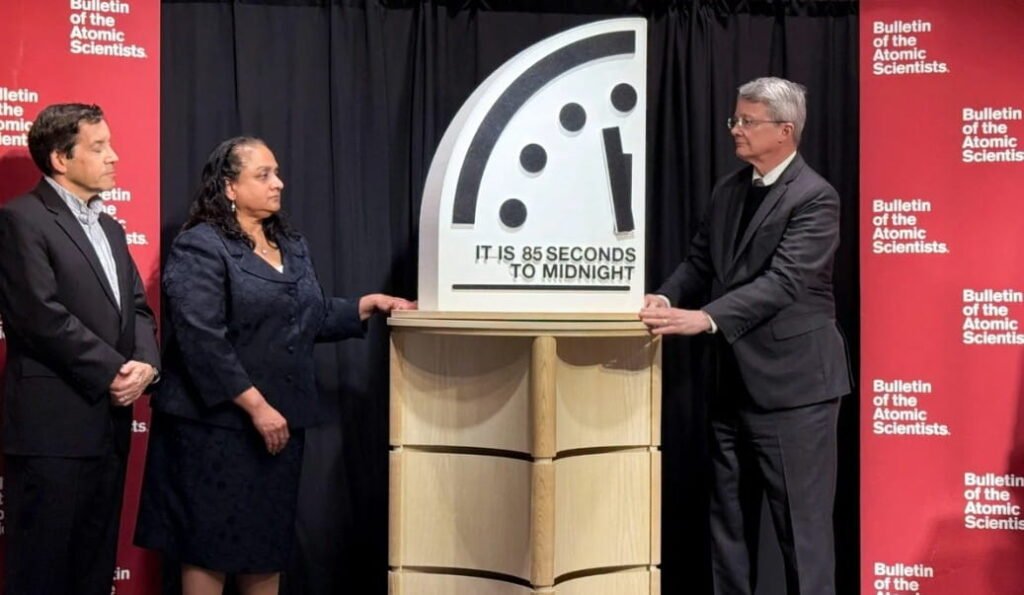
The Doomsday Clock in 2026 isn’t just ticking it’s pounding louder than ever. We’re down to 85 seconds before midnight, and honestly, no generation before us has stared at numbers this grim. It’s the closest we’ve ever been to disaster since the clock started back in 1947.
This isn’t some sci-fi story or a stunt to grab headlines. The Bulletin of the Atomic Scientists yeah, the folks who actually know what they’re talking about, including Nobel laureates and top experts set this clock. Midnight means game over for humanity. Whether it’s nuclear war, climate collapse we can’t undo, rogue AI running wild, or just a mess of small disasters stacking up, it all points to the same thing.
- So, we’re way past asking whether the world’s at risk. The real question now?
- How close are we to the edge, and do we still have time to pull ourselves back?
What’s the Doomsday Clock?
Think of the Doomsday Clock as a giant warning sign for humanity. It doesn’t tick or keep time like a regular clock. Instead, it shows how close we’re getting to disaster total self-destruction, really. Scientists first set it up in 1947, right after nuclear weapons changed everything. Since then, it’s become this famous symbol for global risk.
Midnight on the clock means catastrophe. The closer the hands get to midnight, the more danger we’re in. Every year, experts from the Bulletin of the Atomic Scientists gather to decide where the hands should be. They look at stuff like:
- Nuclear weapons and rising military tensions
- Climate change and environmental breakdown
- Cyber warfare and the spread of misinformation
- Artificial intelligence and killer robots
- Pandemics and how prepared we are for them
- Political chaos and the failure of international teamwork
Right now, in 2026, the clock sits at 85 seconds to midnight the closest it’s ever been, even scarier than during the tensest Cold War moments.
Why 2026 Feels More Perilous Than the Cold War
Remember the Cuban Missile Crisis back in 1962? The world nearly went up in smoke, but the clock wasn’t even this close to midnight then. So what’s changed? Why do scientists say things are even more dangerous now?
Here’s what’s keeping them up at night:
First, nuclear weapons have gotten nastier faster, more accurate, trickier to stop. More countries have them, and a lot of the old agreements that kept things in check have fallen apart.
Second, climate change isn’t some future threat. It’s happening now, and it’s speeding up. We’re already seeing wild heat waves, shrinking ice, rising seas, and huge numbers of people who have to leave their homes. Governments and economies are struggling to keep up.
Third, technology is racing ahead. Artificial intelligence, cyber weapons, autonomous military systems they’re introducing risks we’ve never had to face before. One glitch, one miscommunication, and the results could be catastrophic.
What’s really frightening is how these problems pile up. They mix, make each other worse, and leave us with less room for error.
How Scientists Decide the Clock’s Time
- Setting the Doomsday Clock isn’t some gut reaction or political stunt. It’s the result of tough, detailed analysis by experts from all kinds of fields.
- For nuclear risk, they look at arsenals, military plans, global tensions, and how stable command systems really are. The danger isn’t just someone pushing the button on purpose it’s accidents, mistakes, or hackers messing with systems.
- On climate, the scientists track carbon emissions, global temperatures, biodiversity, and how much governments are actually doing to meet their promises.
- When it comes to technology, the focus is on how fast things like AI, quantum computing, and cyber warfare are evolving much faster than laws or ethics can keep up.
- They also weigh pandemic risks and biological threats, especially after COVID-19 turned the world upside down.
- The 2026 time is their way of saying: these dangers aren’t fading away. They’re actually coming together, creating one big, tangled mess.
What “85 Seconds to Midnight” Really Means
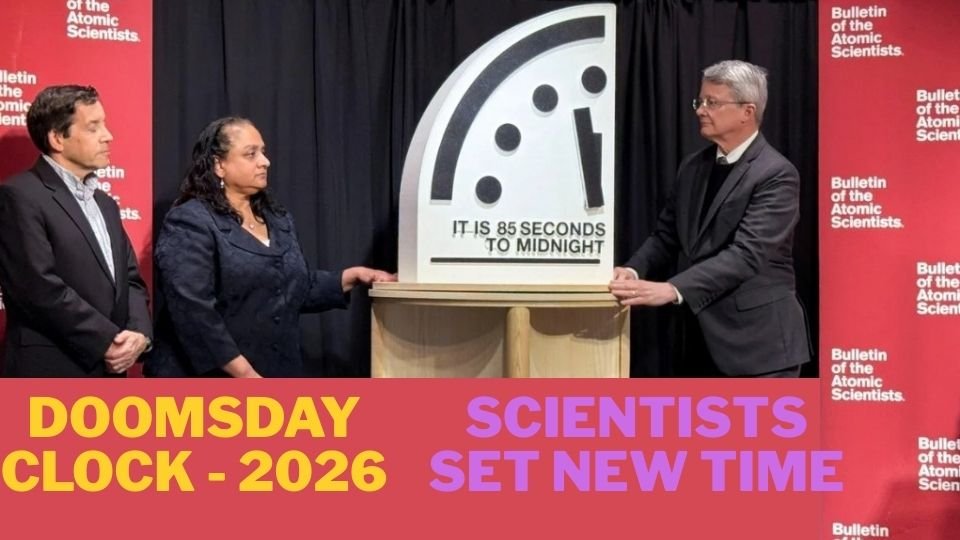
(Pablo Martinez Monsivais/AP)
The clock isn’t trying to predict the exact minute the world ends. It’s a warning a big, loud one.
Eighty-five seconds to midnight means scientists think we’re teetering on the edge. If we cross certain lines, we might hit a point where there’s no going back. Think about:
- A nuclear war that spirals out of control
- Climate tipping points that set off unstoppable chain reactions
- Advanced weapons operating without enough human oversight
- Political breakdowns that make global cooperation impossible
The point isn’t to make people panic, but to wake us up. The threat is real. It’s right in front of us. And it’s getting worse.
Nuclear Tensions: Old Dangers, New Twists
One of the main reasons the clock is so close to midnight? The world’s nuclear order is shakier than it’s been in decades.
Treaties meant to cut down nukes have fallen apart. New weapons, especially hypersonic missiles, can strike so fast there’s barely time to respond. Cyber attacks on military systems make false alarms more likely. And with more regional conflicts involving nuclear powers, there’s a real risk of things escalating before anyone can stop it.
Unlike the old days, there’s no clear standoff between just two superpowers. Now, there are more players, more rivalries, and way fewer hotlines between leaders. That makes managing a crisis much harder.
Climate Change: The Slow Disaster Picking Up Speed
Climate change isn’t some far-off “maybe.” It’s reshaping our world right now messing with ecosystems, economies, and political stability all at once.
Hotter temperatures mean more food shortages, water fights, mass migrations, and economic meltdowns, especially in places that are already struggling. These pressures can topple governments and push countries toward conflict, even nuclear confrontation.
The world keeps missing its targets for cutting greenhouse gases, and the clock keeps ticking.
Artificial Intelligence and Autonomous Systems
One big reason for the 2026 update is how fast artificial intelligence is racing ahead, especially in military and surveillance. Autonomous drones, defense systems run by algorithms, and AI-driven cyber tools all create situations where machines end up moving faster than people can think. The real danger isn’t some evil AI takeover it’s that these tangled systems can act in weird ways when things get stressful. One glitch, one bad read of the data, or one hack, and things could spiral out of control before any human steps in.
Why the Clock Keeps Ticking Forward
- The pattern’s obvious now. For over ten years, the Doomsday Clock keeps creeping closer to midnight. Here’s why:
- Countries struggle to work together
- Arms control deals keep falling apart
- Not enough is done about climate change
- Tech is advancing fast, but nobody’s really in charge
- Politics is more divided than ever, and trust is fading
The world’s more connected than it’s ever been, but somehow, people are worse at solving problems together. All these massive challenges need teamwork, and our systems just aren’t keeping up.
Can We Turn the Clock Back?
History says yes. The clock can move away from midnight if people act. After the Cold War, the hands slid all the way back to 17 minutes to midnight the safest it’s ever been. That happened because countries agreed to cut nuclear weapons, tensions eased, and leaders started talking again. So, the Doomsday Clock isn’t some prophecy you can’t escape. It’s a way of saying, “Your choices matter.”
What This Means for Ordinary People
Pablo Martinez Monsivais/AP
The Doomsday Clock might sound like a problem for world leaders, but honestly, it matters for everyone. When people stay informed, they help shape better decisions. Public pressure can shift climate policy, nuclear agreements, and how we handle new tech. Knowing what’s really going on makes it harder to get tricked by fear or fake news. The point isn’t to live in panic, but to stay sharp and support leaders who take this stuff seriously.
Frequently Asked Questions – Doomsday Clock 2026 time
Q1. Is the Doomsday Clock real?
It’s a symbol, but it’s grounded in real science and world events.
Q2. Does it predict the exact end of the world?
No. It just measures how risky things are.
Q3. Why does it include climate change and AI?
Because now, all these threats mix together. Even non-nuclear problems can set off nuclear ones.
Q4. Should people panic?
Nope. The clock is a wake-up call, not a reason to freak out.
Why 85 Seconds Is a Big Deal
Picking 85 seconds isn’t random. Scientists want everyone to see how tight the margin is. Every second on that clock stands for growing instability, less time to fix things, and fewer chances to get it right.
Conclusion: A Warning, Not a Prophecy
Setting the clock at 85 seconds to midnight in 2026 is one of the starkest warnings scientists have ever sent. It doesn’t say the end is coming for sure. It says the danger is real, it’s getting worse, and it’s mostly up to us. The clock isn’t counting down to disaster it’s showing how much time we still have to turn things around. History proves we can move the hands back with cooperation and real leadership. What we do now decides whether this is remembered as the moment we stepped off the edge, or the moment we finally pulled together.