



Abella Danger Miami Hurricanes superfan is a statement that’s come out of nowhere to dominate sports news, social network searches and fan discussions across America. What began as a couple of snapshots from the College Football Playoff immediately became one of the biggest viral phenomena of the 2026 championship season. Abella Danger’s raw, tearful reaction to Miami being routed and her visible anger as she watched Canes’ “fans” get up and leave Hard Rock Stadium by the thousands was in full view of the cameras and within minutes on loop on social media.
It wasn’t scripted. It wasn’t staged. It was raw, human and all too relatable. That is precisely why the moment was made to go viral. But this is about more than just a celebrity at football game. It is the story of how modern fandom, influencer culture, sports media and emotion-based storytelling clashed on the grandest stage in college football.
How Abella Danger Became a Miami Hurricanes Super Fan
Long before the cameras discovered her during the College Football Playoff, Abella Danger made openly public of love for the Miami Hurricanes. She went to games, posted in team colors and openly rejoiced at victories and grieved defeats like any other die-hard fan.
Unlike the fleeting appearances of celebrities battle, it felt some how congruent and real that she was here. She didn’t appear for publicity stunts or halftime photos, fans observed. She followed the season, criticized players and showed real emotional engagement with the team’s journey. In an era of social media, this type of demonstrative loyalty elevates a supporter to “superfan” status. And when that superfan already has a significant digital presence, the spotlight only burns hotter.
It was CFP Championship Moment That Made a Difference
The national title died a slow death for Miami in the College Football Playoff national championship game. On screen, as time expired, TV cameras focused on Abella Danger in the stands, clearly upset, tears streaming down her face as she fought to suppress disappointment. It was a blip in the course of dozens of plays, statistics and replays. But it would be the moment that everyone remembers.
Her response wasn’t about fame. It was about heartbreak. Every lifelong sports fan knows that feeling the hush when your team misses out on a title, the incredulity, the pang of an “if only.” It was comforting to find in a public figure someone who had felt the same pain as me. Within minutes, clips of her excitement flew across ESPN, X, Instagram and TikTok as well as sports and gaming boards. Headlines followed. Memes appeared. And the words Abella Danger Miami Hurricanes superfan started trending.
Why Fans Relate to Her Tears
Sports are inherently emotional, but televised emotion often feels manufactured. Coaches give scripted interviews. Players follow media training. Analysts stick to statistics.
But a fan’s heartbreak is true.
It wasn’t celebrity they saw when Abella Danger sobbed in the stands. They saw themselves. They saw the version of themselves that melted into a couch after losing a championship, unable to take their eyes off the screen. That authenticity is powerful. It pierces cynicism and reminds everybody of the reason sports count not merely as a form of entertainment, but as an emotional investment.
Media Reaction: From Sideline Shot to National Headline
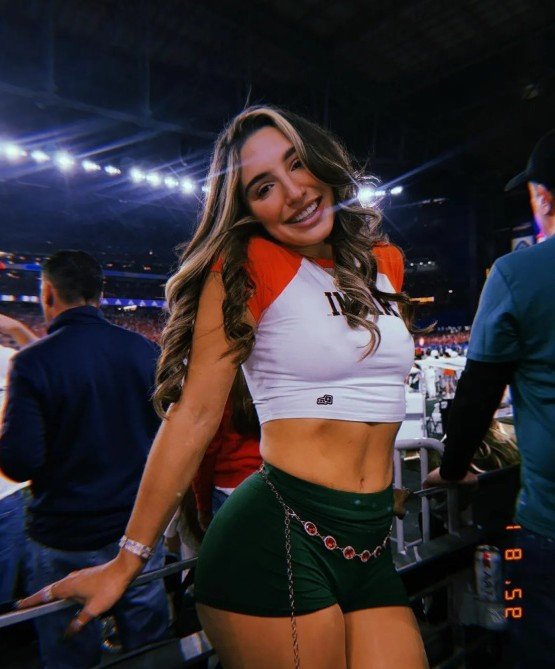
After the clip went viral, larger sports outlets started picking it up. ESPN replayed the moment. The emotional toll Afterward, USA Today unpacked. Sports Illustrated covered the influencer culture of college football fandom.
The story line could not shift from “celebrity at game” to “symbol of Miami’s heartbreak” quickly enough. In an odd way, she became the face of the loss not controversy as much as vulnerability. Commentators wrote on how the modern broadcast now gets not only the athletes but also, crucially, the audience and its emotional journey. And the response to Abella Danger was evidence of that change.
Such is The Carson Beck Jersey and the Fashion Buzz
Just when you thought the story couldn’t be any more layered was her game-day outfit. In a Carson Beck No. 11 jersey, she inadvertently set off another round of debate about sports fashion and player branding. Today, in the NIL era that has finally arrived, college athletes are their own brands. Their jerseys are no longer mere uniforms; they are fashion statements, identity markers, social media fringe benefits.
As photos of Abella Danger in the jersey circulated, fans argued about what it represented. Some saw it as pure support. Some looked at it as exposure and visibility. But one thing was certain: The image swirled well outside the stadium, becoming a viral sports-culture moment.
What Happens When Influencer Culture and College Football Clash
The Abella Danger Miami Hurricanes superfan is a spectacle of the reality-based trend. The age of sports fandom being limited to stadiums and television is over. It’s now resident on platforms where personality, storytelling and visibility inform narratives.
Influencers bring massive audiences. When they coalesce around a team, that squad’s reach extends well beyond its usual fans. That’s not a substitute for loyal supporters; it extends the ecosystem. In Abella’s case, at least, the emotional response did not come across as promotional. It felt personal. Which is why it struck a note across the demographic spectrum from hard-core college football analysts to even casual followers scrolling through social media.
Famous Fans and Their Influence on Team Culture
Celebrity backers are not new to Miami. From musicians to actors, the Hurricanes have a history in pop culture. But what distinguished this one was the emotional reality of it.
Most celebrity appearances are celebratory. Smiles. Posed photos. Luxury boxes. This was the opposite. It was the pure loss, on millions of screens. Such moments humanize sports brands. They serve as a reminder that beyond the logos and the sponsorships, there is real emotional investment.
The Debate: Support, Criticism and Online Polarization
Like any viral moment, there were mixed reactions. Her obvious devotion garnered plenty of sympathy and respect from fans. Others complained about media attention to a celebrity and not the players.
Even the debate itself is emblematic of our modern sports culture. The attention would no longer be dictated by just athletic achievement. It is a creature of feeling, storytelling and shareability. But even critics conceded that the moment had captured something authentic. And in an age of highly curated content, genuine emotion is powerful.
What This Moment Reveals About Modern Sports Storytelling
The professional Abella Danger Miami Hurricanes superfan story is a sign of where sports coverage is going, not where it’s been. It’s not just touchdowns, tackles and trophies anymore. It is about human stories.
Today’s broadcasters look for emotional arcs in the crowd as much as on the field. Sometimes the wail of a fan can express the gravity of a loss more effectively than any statistic. That does not water down athletic accomplishment. It shows the other side of victory and defeat as well.
The Impact on NIL, Branding, and Athlete Exposure
With Name, Image and Likeness craziness in the college game these days, every visual associated with a player or team is marketing gold. Show me a high profile and I’ll show you the jersey worn, just made public.
Although it was not a marketing campaign, Abella’s appearance showed how unplanned moments can still yield branded impact. Among recruits like Carson Beck, that exposure only solidifies how their personal brand is known outside of one of college football’s bubble.
Emotional Fandom in the New Media Age
Years ago, if a fan began to cry in the stands, it would be a private moment, shared with just those nearby. Today, a single camera angle can make it a global conversation. It makes for more connection and it fosters more scrutiny. It means fans are visible, emotions are archived, and reactions contribute to the historical record of a season.
For Abella Danger, that single moment was enough to ensure her a place in the Miami CFP run of 2026.
Who in This Story Will Be Remembered
Championships are defined by plays made to win them. But sometimes losses are not defined by a box score but instead the faces in the crowd, the silence in the stands and tears that stand for collective heartbreak.
So, years from now, when fans of one school or the other look back on that CFP game, they’re going to remember not only the final score but also the image of a despondent fan that was emblematic of an entire fan base in mourning.
This is the power of visual storytelling in sport.
Frequently Asked Questions
How did Abella Danger become a Miami Hurricanes super fan?
By sheer fan enthusiasm, game attendance and collective emoting from the stands on the team’s passage.
Why did her CFP post go viral?
Because it was realness, unscriptedness and relatable, catching that universal sensation of sports heartbreak.
What is the deal with the Carson Beck jersey?
It was a symbol of modern athlete branding, how fashion, fandom and NIL culture have waltzed together.
What was the reaction from major media outlets?
ESPN, USA Today and Sports Illustrated picked up on the moment as an illustration of emotional storytelling that can be found in today’s telecasts.
Conclusion: More Than just a Viral Clip, an Icon of Contemporary Fandom
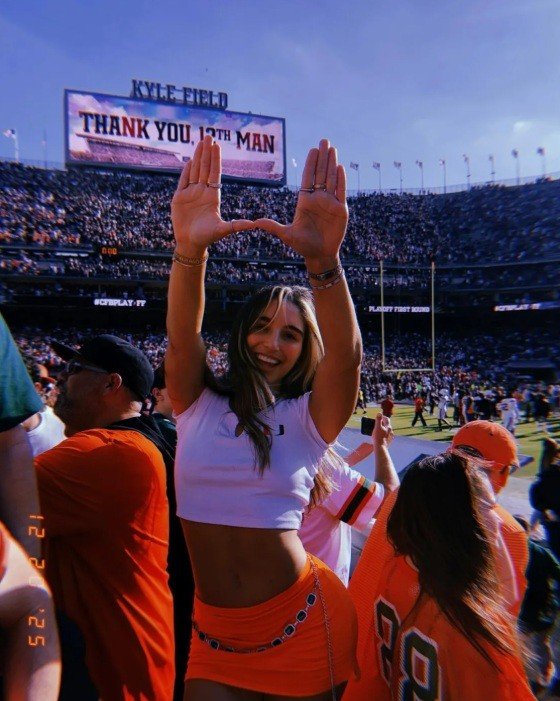
The Abella Danger Miami Hurricanes superfan narrative is not one of red-carpet glamour. It is about emotional honesty in sport. In one single camera shot, millions of people saw what it means to care deeply about a team, and to hold hope in their hearts, only to have that hope dashed. At a moment when content is filtered, edited and optimized for engagement, raw emotion still cuts through everything. Tears in the stands are sometimes more eloquent than a trophy ceremony.
Nothing is particularly beautiful right now, but if you’re a sports fan, this was the moment that reminded us why we give our hearts to sport for companionship, identity and collective experiences of triumph and desolation. And in that way, Abella Danger did not just go viral. She was, for that brief, but powerful moment, the face of every Miami fan who had believed and hoped and felt the pain of coming so close to glory.