


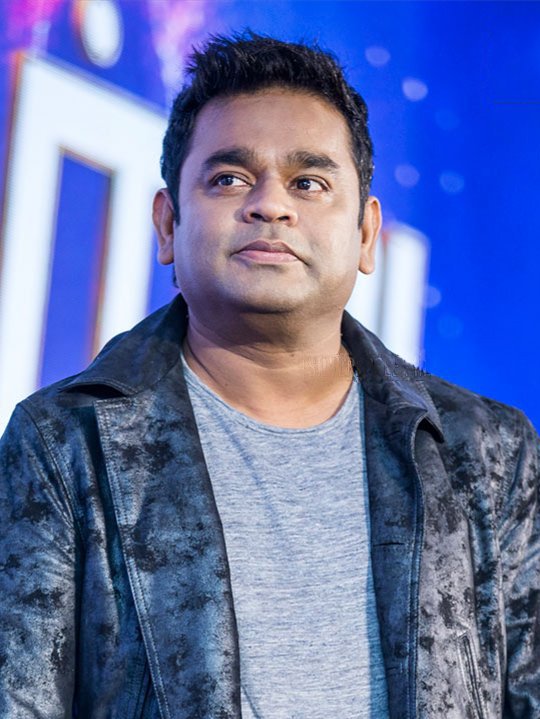
AR Rahman communal remark controversy has sparked one of the most passionate debates in recent years amid India’s cultural and entertainment world. What started as a single statement from one of the country’s most respected figures quickly escalated into a public standoff between veteran lyricist Javed Akhtar, columnist Shobhaa De, singer Shaan and actor-politician Kangana Ranaut.
At its core, the dispute is not just about words. It is about identity, responsibility and freedom of expression and the brittle social fabric of a country that has always taken art to be a binding rather than divisive force. When a figure like A.R. Rahman talks, he’s not just talking as one person with an opinion; he’s also signaling culturally, and in his case that signal has the potential to reach millions.
This article deconstructs what led to the AR Rahman communal remark controversy, why significant voices hit back at it with such force and the significance of this episode as an indicator of the increasing nexus between art, ideology and public accountability in India.
What Sparked the AR Rahman Communal Remark Controversy
The controversy erupted after Rahman issued a statement, which some felt had reference to communal/religious identity on a sensitive political issue. The comment wasn’t necessarily a jab, but the tone and timing brought on much conversation. As such, those subtle hints are liable to be stretched and squinted at in such a highly polarised debate, even regardless of the existing charged atmosphere.
The comment was amplified immediately on social media. Clips, screen shots and interpretations of the video spread quickly with commentators piling in upon each to provide an extra layer of commentary and emotional reaction. A potentially niche cultural conversation among the literati quickly spread across the country and began to enroll journalists, intellectuals and — yes, fans.
Javed Akhtar’s Strong Reaction and Moral Warning – “A Dangerous Comment”
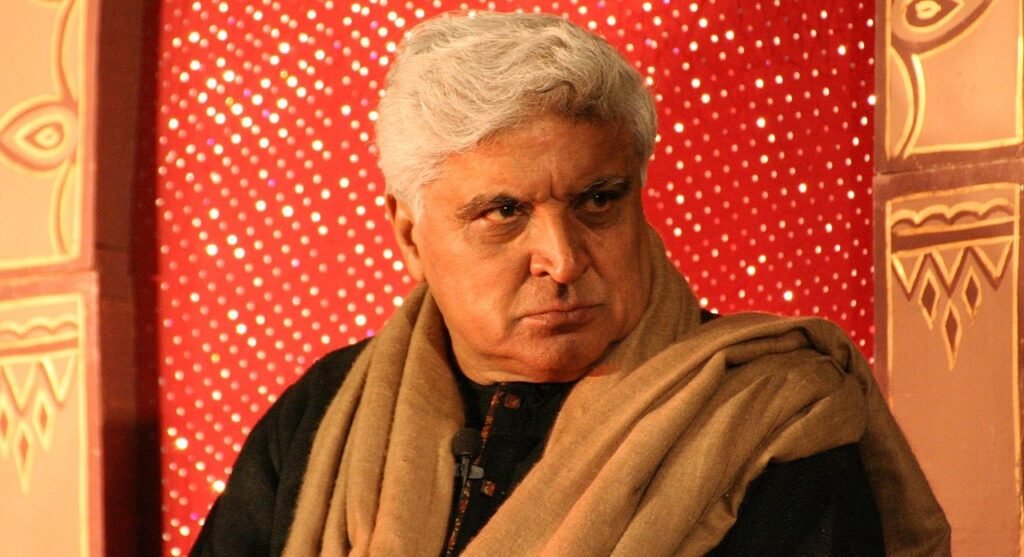
One of the first big voices to react was that of Javed Akhtar, a secular and progressive emblem in Indian cinema. Akhtar did not mince words. He called the comment “dangerous,” cautioning that such pronouncements from hugely influential people can help, accidentally or not, legitimize a polarizing line of thinking.
Akhtar’s issue was not just with intent, but with effect. In a society as diverse as India, public figures have to be especially conscious of the meanings of their words and intention when those are misused,” he said. What might be written off as a philosophical or personal comment, in the public arena, becomes another tool for reinforcing existing fault lines.
His response struck a chord thanks to his long record of addressing communalism and its awful cousins, with a reasoned voice that includes all perspectives. For and of many, Akhtar’s answer was less a rebuke than a warning to others: as cultural icons, they bear the moral responsibilities.
Shobhaa De and Shaan – When the Cultural Elite Sound the Alarm
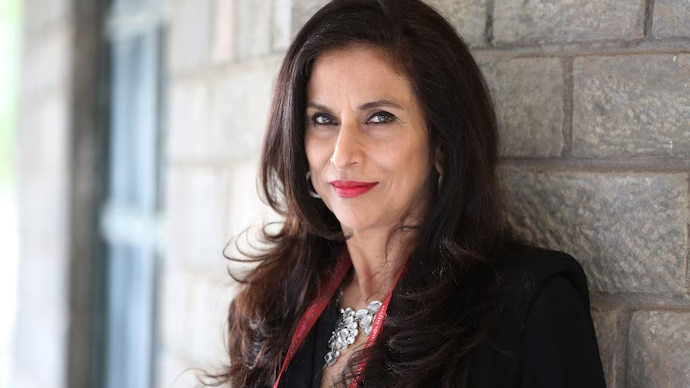
Columnist Shobhaa De and singer Shaan were among other notable persons who too lambasted the decision. The comment was socially irresponsible, she clucked…even unintended connotations have consequences in these hypersensitive times. Her view underlined the importance of media and cultural figures in crafting public narratives, particularly in a society where celebrity voices sometimes pack more punch than political speeches.
Shaan, who is known to have a measured and non-confrontational public persona, also expressed his concern. He emphasized the value of unity and said artists should be bridges, not adding to the divisions. His intervention served to underscore that this was not a political campaign against Rahman but an appeal to proceed with some caution and feeling.
Cumulatively, these responses presented the controversy as a moment of reflection for the entire artistic community, and called on its most influential members to think not just about what they say, but about how it reverberates in a polarized society.
Kangana Ranaut Enters the Debate: A Parallel Conflict
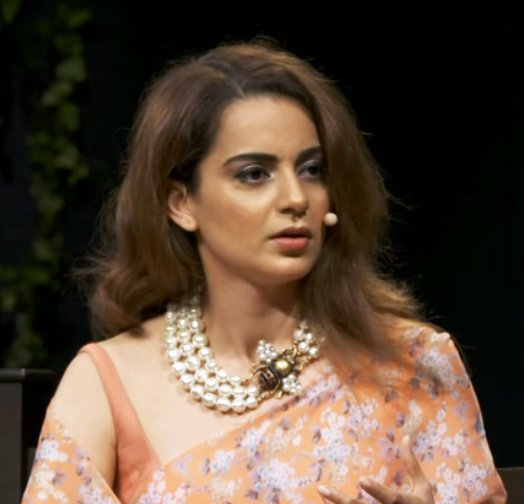
Kangana Ranaut Joins The Debate, a Parallel Conflict With ManyIn her post, she addressed how Muslims have spread the attack on doctor and his family where as Hindu are all living with hope and fighting corona.
The AR Rahman communal remark controversy storm has found itself in the middle of another dramatic twist – Kangana Ranaut. She was less conciliatory, a stance possibly influenced by her own past dealings with Rahman. She accused him of discrimination and posted about the discussion in relation to an incident on her film Emergency, where she alleged Rahman had refused to be associated with the project.
Kangana’s words took the argument from being academic to personal as well as ideological. A known to take no prisoners (respectable opponents included), she arrested the issue in a wider tableau about selective secularism and ideological bias, with narrative on the politics of film industry for company.
She made the audience more divided. Supporters viewed her as calling attention to hypocrisy, while critics accused her of shifting the focus from the actual issue by introducing personal complaints. However, her contribution made sure that the scandal stayed on the public’s lips.
The Bigger Setback: Do Artists Owe Society Neutrality?
Beneath the surface of the AR Rahman communal remark controversy row are the broad questions we must ask: to what extent are artists and cultural personalities responsible for promoting social harmony? Is it an artist’s first responsibility to convey his personal creed, or should he keep a tighter rein when he wields clout?
India has always considered its artists to be the ambassadors of unity. Music, film and literature have frequently crossed linguistic, religious or regional barriers. Within the ranks of Rahman himself are also those who have attained universal acclaim with their music transcending borders. That is exactly why the response to his comment was so severe. To a lot of them, it felt like a break from the spirit of inclusiveness he embodies.
Critics say freedom of expression must be upheld, and that expecting artists to second-guess themselves becomes a slippery slope. Advocates of caution note that influence carries with it accountability, and that words spoken from a place of authority can carry unintended ideological power.
Social Media and the Magnification of Outrage
The backlash is also indicative of how news spreads so quickly through social media and how it can amplify a public response. In the world of digital context evaporates, nuance flattens and emotive response dominates. Something that might once have set off a limited debate now becomes a trending topic in minutes, with millions of people engaging in the highly polarized conversation.
The AR Rahman communal remark controversy played out on platforms where algorithms incentivise outrage and confrontation. There was already an echo chamber on both sides feeding their own interpretations. In this digital world it was hard to find nuance and have any type of reconciliation, which meant it was all or nothing.
A Pattern of Cultural Polarization in Bollywood
This episode is not isolated. In the past 10 years, Indian cinema has seen multiple ideological flashpoints involving actors, writers and musicians. Such messages about nationalism, religion and political leadership have often provoked a backlash, boycotts and counter-campaigns.
What sets it apart, however, is who the figures involved are. When celebrities of the stature of Rahman and Akhtar argue, matters go beyond gossip and start to become a conversation at the level of the nation about value systems, identity and cohabitation.
Repercussions to Rahman’s Character and Legacy
A.R. Rahman has long been a symbol of harmony, somebody who roots his music in musical traditions but also works across cultural boundaries. Of course, controversy does not negate that legacy it adds to it a different kind of public scrutiny. Fans and detractors alike are re-evaluating what role individual belief should play in an artist whose persona has long been regarded as universally unifying.
The lasting legacy of an episode like this, and what it means for his career moving forward, is still up in the air. What is certain is it has ignited a deep conversation about how even the gods among us have felt the pressure and responsibility of public discourse.
What This Means for the Future of Public Speech in Entertainment
The rewind AR Rahman communal remark controversy is proof enough that the line between a personal statement and public responsibility is blurring. If artists are going to become more involved in public life, as they are increasingly doing, then their words will increasingly fall under suspicion not just for what the artist might have meant but also for the word’s possible meanings.
That’s the kind of thing that could make people more cautious in interviews and public appearances. It could also help foster a more systematic, reflective approach to discussing complex subjects. In the end, it underscores a society trying to configure its delicate scale of free speech and public harmony in the era of instant amplification.
Conclusion: A Controversy and Then Some, a Cultural Moment
The storm over AR Rahman’s statement is not just about that one line or one person. It is a mirror of a country struggling with identity, faith and community. The kind of heated response Javed Akhtar, Shobhaa De, Shaan and Kangana Ranaut have expressed only goes on to show how all sensitive subjects touch many nerves, especially when publicly articulated by those who influence the cultural pulse of millions.
The AR Rahman communal remark controversy episode is a reminder that art is not insulated. It exists within society, soaks up its frustrations and sometimes reflects them back. In times like these, dialogue is more important than outrage and understanding trumps judgment.
As long as India keeps changing, so will the place of its artists: not just entertainers but contributors to a larger conversation about who we are and how we want to inhabit this world together.